Learn TAT, WAT, SRT & SD for SSB interviews with easy explanations, examples, and expert tips by The Lakshya Academy. Master psychological tests confidently.
Psych Tests Decoded: TAT, WAT, SRT & SD Made EasyBy Lakshya Academy
Psychological tests play a crucial role in defence and leadership selection processes such as the SSB Interview. For many aspirants, terms like TAT, WAT, SRT, and SD sound confusing and intimidating. However, when understood correctly, these tests are not difficult—they are simply tools to assess your personality, mindset, and officer-like qualities (OLQs).
At The Lakshya Academy, we believe that with the right guidance and practice, anyone can master these tests. In this blog, we decode each psychological test in a simple, structured, and exam-oriented way to help you perform confidently and naturally.
What Are Psychological Tests?
Psychological tests are designed to evaluate your thought process, emotional stability, problem-solving ability, and social adaptability. Unlike written exams, there are no right or wrong answers. Instead, the focus is on how you think, react, and express yourself under time pressure.
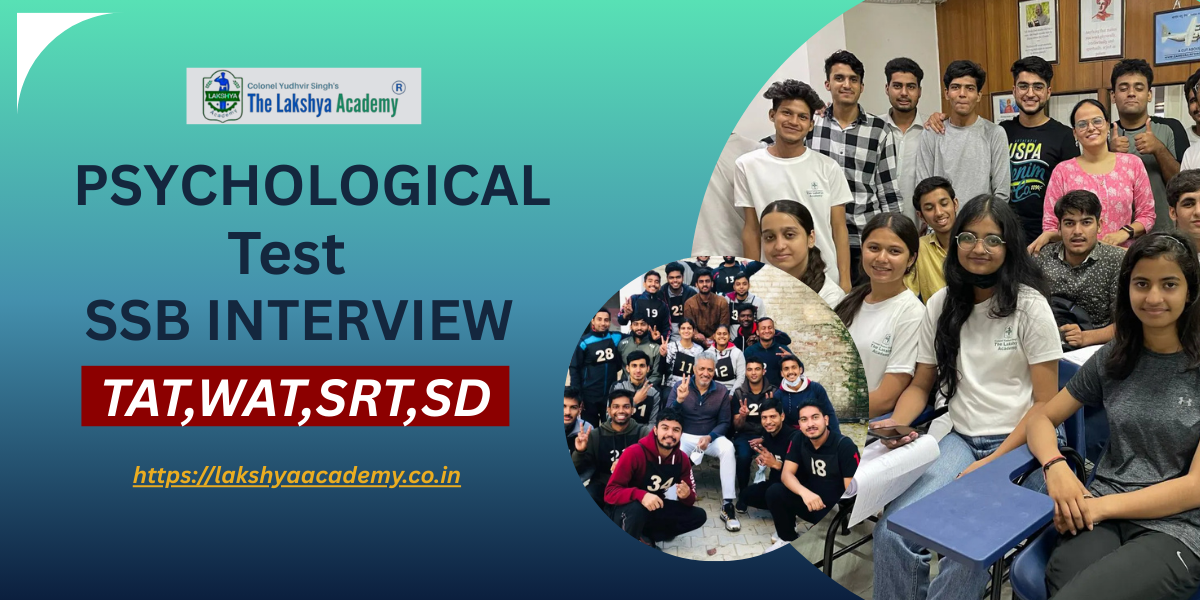
The four major psychological tests are:
TAT – Thematic Apperception Test
WAT – Word Association Test
SRT – Situation Reaction Test
SD – Self Description Test
Together, they help psychologists understand your true personality beyond rehearsed answers.
TAT – Thematic Apperception Test Explained
The Thematic Apperception Test (TAT) is a story-writing test based on ambiguous pictures.
How TAT Is Conducted
You are shown 12 pictures (including one blank slide)
Each picture is displayed for 30 seconds
You get 4 minutes to write a story
What to Include in a TAT Story
A well-structured TAT story should include:
Characters – Age, gender, and mood
Situation – What is happening and why
Action – How the main character responds
Outcome – A positive and logical conclusion
What Psychologists Look For
Leadership qualities
Responsibility and initiative
Positive attitude
Practical problem-solving
The Lakshya Academy Tip
Avoid negative, dramatic, or unrealistic endings. At The Lakshya Academy, we train aspirants to write simple, optimistic, and action-oriented stories that reflect natural leadership traits.
WAT – Word Association Test Made Easy
The Word Association Test (WAT) checks your spontaneous thoughts and subconscious beliefs.
How WAT Is Conducted
You are given 60 words
Each word appears for 15 seconds
You must write the first thought that comes to your mind
Example
Word: Failure
Response: Failure teaches valuable lessons
Do’s and Don’ts of WAT
Do:
Keep sentences short and positive
Reflect confidence and maturity
Stay natural and honest
Don’t:
Use negative or pessimistic language
Write memorized or artificial lines
Overthink the word
The Lakshya Academy Tip
We emphasize thinking clarity over vocabulary. Simple words with strong intent always create a better impression than complex sentences.
SRT – Situation Reaction Test Simplified
The Situation Reaction Test (SRT) evaluates your decision-making ability under pressure.
How SRT Is Conducted
You are given 60 situations
Time allotted: 30 minutes
You must write what action you would take in each situation
What Makes a Good SRT Response
Quick and practical thinking
Sense of responsibility
Courage and social awareness
Balanced emotional response
Example Situation
You notice a fire in a nearby house.
Good Response: Inform fire services immediately, alert neighbors, and assist in evacuation if safe.
The Lakshya Academy Tip
Avoid heroic or unrealistic actions. Psychologists prefer calm, safe, and responsible responses over risky behavior.
SD – Self Description Test Explained Clearly
The Self Description Test (SD) is a written reflection of how you see yourself and how others see you.
SD Includes Five Parts
What your parents think about you
What your teachers/seniors think about you
What your friends think about you
What you think about yourself
What you want to improve
Key Points to Remember
Be honest and consistent
Avoid exaggeration
Mention realistic strengths and weaknesses
The Lakshya Academy Tip
Your SD should match your performance in TAT, WAT, and SRT. Consistency is the key to psychological recommendation.
Common Mistakes Aspirants Make
Many candidates fail psychological tests due to avoidable mistakes, such as:
Copying answers from books or the internet
Writing negative or emotionally unstable responses
Trying to impress instead of being genuine
Ignoring time management
At The Lakshya Academy, we focus on personality development, not answer memorization.
How The Lakshya Academy Helps You Master Psych Tests
The Lakshya Academy offers a structured and scientific approach to psychological test preparation:
Expert psychologist guidance
Daily TAT, WAT, SRT, and SD practice
Personalized feedback sessions
OLQ-based personality development
Real SSB-like test environment
Our goal is to help aspirants understand themselves, build confidence, and express their true potential.
Final Thoughts
Psychological tests are not about intelligence or English skills—they are about clarity of thought, emotional balance, and leadership potential. When you understand the purpose of TAT, WAT, SRT, and SD, these tests become simple and manageable.
With the right mentorship from The Lakshya Academy, you can approach psychological tests with confidence and authenticity. Remember, the best performance comes when you are prepared, positive, and true to yourself.