If you’re preparing for the Indian Army, NDA, CDS, or AFCAT, you’ve probably heard about the Services Selection Board (SSB). But here’s what many candidates don’t realize: the selection process is evolving significantly.
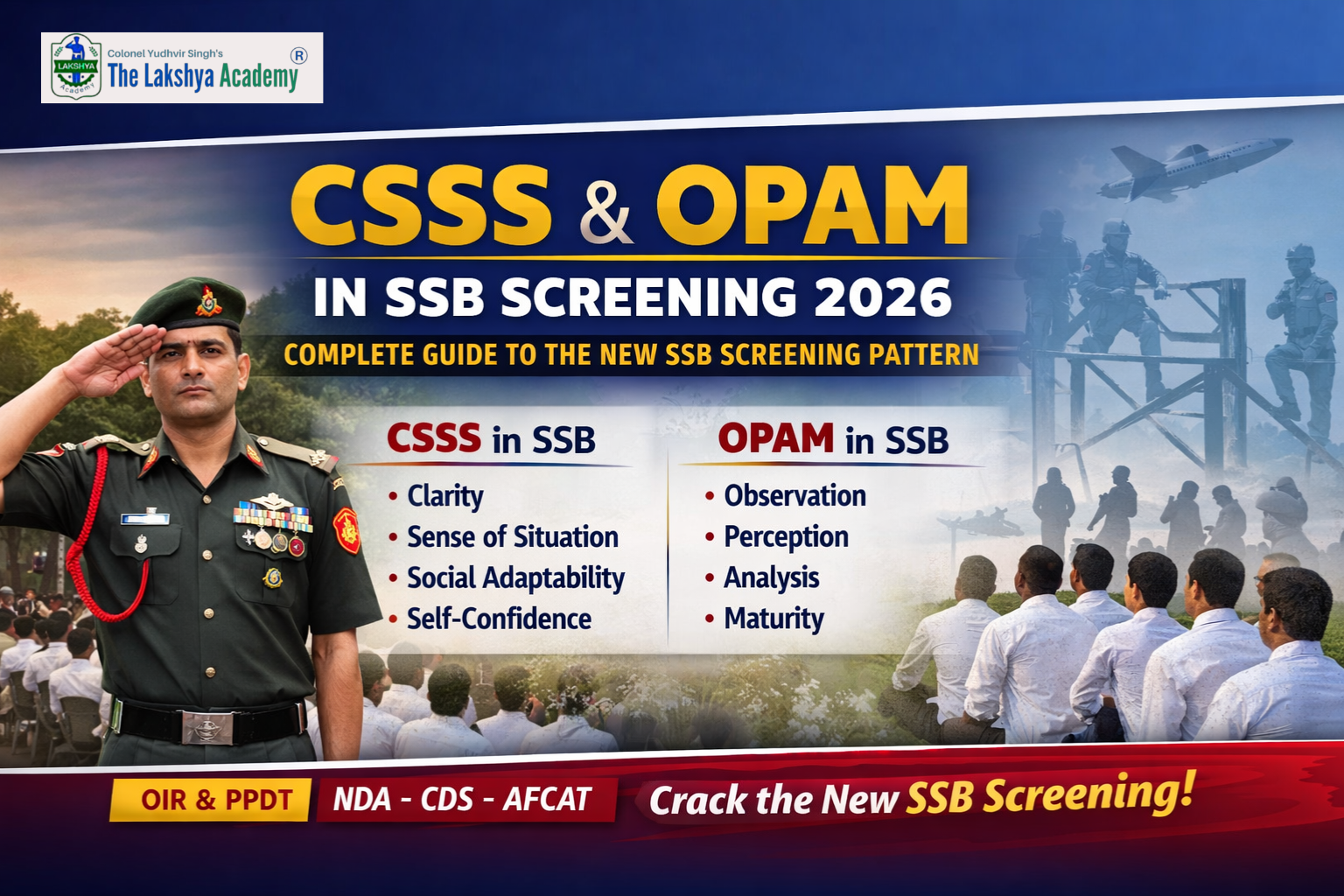
The Computerized Stage 1 Selection System (CSSS) represents a revolutionary shift in how the Indian Army screens candidates. Instead of managing multiple written tests across different examination halls, CSSS consolidates everything into one smart, tech-enabled platform that’s faster, fairer, and more objective than traditional methods.
This comprehensive guide breaks down exactly what CSSS is, how it works, and how you can prepare effectively to clear this critical stage.
What Is CSSS? Understanding the System
CSSS stands for Computerized Stage 1 Selection System.
Officially designed by the Directorate General of Recruiting, Indian Army, CSSS is a computer-based assessment platform that evaluates both your cognitive abilities and personality traits in a single sitting. The system represents the army’s commitment to modern, objective recruitment practices.
The traditional approach required candidates to take multiple tests across different locations with manual evaluation and weeks of waiting for results. CSSS changes this entirely: one computer, one sitting, instant results.
The system automatically calculates and compiles results in real-time, eliminating manual errors and subjective bias. This is why candidates increasingly view CSSS as truly merit-based assessment.
The Two Parts of CSSS: Cognitive Battery + OPAM
CSSS evaluates two critical dimensions of officer capability:
Part 1: The Cognitive Battery
This section tests your mental abilities through five key areas:
Space & Form Perception – Understanding spatial relationships and visualizing objects in 2D and 3D is critical for map reading and tactical awareness. Officers need to interpret terrain and spatial layouts at a glance.
Visualization – The ability to mentally fold, unfold, and transform objects reflects spatial intelligence crucial for field decisions and tactical problem-solving. This skill directly impacts how you handle complex scenarios.
Working Memory – Processing multiple pieces of information simultaneously while solving problems demonstrates how well you function under pressure-an essential officer trait. Officers constantly juggle multiple tactical information points.
Attention & Focus – Spotting details quickly amid distractions while maintaining sharp focus under time constraints mirrors the demands of battlefield situations. Your ability to stay alert and notice crucial details matters significantly.
Language Ability – Understanding and processing language-based questions rapidly shows your communication capability, which is fundamental to officer effectiveness. Clear communication is a cornerstone of leadership.
These five abilities together test your higher-order thinking-the core capability that distinguishes exceptional officers from average candidates.
Part 2: OPAM (Objective Personality Assessment Measure)
OPAM evaluates the 15 Officer-Like Qualities (OLQs) through approximately 120 self-report multiple-choice questions. These qualities include:
Effective Intelligence, Reasoning Ability, Organizing Ability, Power of Expression, Social Adaptability, Co-operation, Sense of Responsibility, Initiative, Self Confidence, Speed of Decision, Determination, Courage, Stamina, Liveliness, and Keenness to Excel.
Critical point: There are no right or wrong answers in OPAM. The system evaluates whether you possess authentic officer-like characteristics. Attempting to fake responses is both ineffective and unethical- CSSS uses psychological safeguards that detect dishonest patterns.
The golden rule is simple: “Be yourself. The system will find out anyway.”
Why CSSS Was Introduced
The Indian Army needed a selection system that was:
Tech-Enabled – Using modern technology to ensure objectivity
Fair – Removing manual evaluation bias
Fast – Delivering instant results without delays
CSSS achieves all three, representing a genuine game-changer for merit-based evaluation.
User-Friendly Technology-No Computer Skills Required
Many candidates worry about taking a computer-based test. Here’s the reassuring reality: CSSS is specifically designed for candidates with no computer experience.
The navigation uses only LEFT and RIGHT arrow keys-no mouse, no typing. Before the actual assessment begins, practice questions appear so you’ll know exactly what to do when it counts. Every section includes clear on-screen instructions explained before you begin.
The system philosophy is: “Focus on the TEST, not the technology!”
The Critical Balance: Speed + Accuracy
Success on CSSS depends on balancing two competing demands:
Speed matters – Each question has a strict time limit. Slow pace means an incomplete test and lower scores. Every second counts, and the timer moves relentlessly.
Accuracy matters – Rushing blindly through questions reduces your score. A few correct answers beat many wrong ones. Quality matters alongside quantity.
No going back – Once you move to the next question, previous answers are locked. This reinforces thinking carefully the first time rather than hoping to revise later.
Stay calm – Composure under pressure is itself an officer quality being assessed. Mental stability directly impacts performance.
The winning formula: Speed WITH Accuracy = Success
How Your CSSS Day Works
Your assessment day follows this structure:
Arrival & Setup – You’re assigned a computer terminal in the examination hall with quick, straightforward setup.
Sample Practice – Practice questions help you get familiar with the interface, understand arrow key navigation, and build confidence before the real test begins.
Cognitive Battery (Timed) – You complete timed tests covering space perception, visualization, working memory, attention, and language ability.
OPAM Section (Timed) – You answer approximately 120 personality assessment questions evaluating alignment with the 15 OLQs.
Instant Results – The system auto-calculates results immediately. No manual checking. No waiting. Everything happens in one location.
Essential Preparation Strategy
Practice speed-based aptitude tests daily – Building speed gradually without sacrificing accuracy is key. Even 20-30 minutes of focused daily practice makes a significant difference.
Answer OPAM questions honestly – Your authenticity is your strength. Reflect on your actual personality traits, understand your genuine strengths and growth areas, and be authentic.
Get comfortable with computer-based testing – Use online practice platforms regularly, practice navigation with arrow keys only, and simulate the testing environment at home.
Build speed and accuracy simultaneously – Start with accuracy; speed comes naturally through practice. Time yourself on practice tests and identify which question types slow you down.
Manage test anxiety – Practice deep breathing, get adequate sleep, eat a healthy breakfast, arrive early, and remember that composure itself is being evaluated.
Your Success Formula
Preparation + Honesty + Speed + Composure = Clearing CSSS
The new CSSS system represents genuine advancement in defence officer selection. You don’t need special shortcuts-just honest self-assessment, consistent preparation, focused practice, and calm composure on test day.
If you’re serious about joining the Indian Armed Forces, treat CSSS as your opportunity to showcase both cognitive strength and genuine personality. The system is designed to be fair-make sure you’re ready to perform.
Key Points to Remember
CSSS is computer-based but requires no prior computer skills. The Cognitive Battery tests your thinking power across five critical dimensions. OPAM reveals whether you possess authentic officer-like qualities. Speed combined with accuracy is essential. Once you move forward, you cannot return to previous questions. The Indian Army continuously refines CSSS to select cognitively superior, ethically sound officers.
Final Thoughts
The new CSSS system is a significant advancement in defence officer selection. Instead of traditional tests, you’re now assessed by an intelligent, objective system that looks beyond surface performance to identify genuine officer material.
Your officer’s journey starts with CSSS. Make it count.