The Psychology Tests are among the most crucial stages of the Services Selection Board (SSB) Interview. Conducted on the second day of the SSB process, these tests help assess a candidate’s personality, thought process, decision-making ability, emotional stability, and potential to become a military leader.
Unlike written examinations, psychology tests do not have “right” or “wrong” answers. Instead, they reveal your natural responses, attitude, and personality traits. Understanding the purpose and format of these tests can significantly improve your confidence and performance.
At The Lakshya Academy, we guide aspirants to develop genuine Officer-Like Qualities (OLQs) that reflect naturally during the psychology assessment.
Why Are Psychology Tests Conducted in SSB?
The Armed Forces require officers who can lead teams, make quick decisions under pressure, and maintain a positive attitude in challenging situations. Psychology tests are designed to evaluate these qualities through a series of exercises that capture a candidate’s subconscious responses.
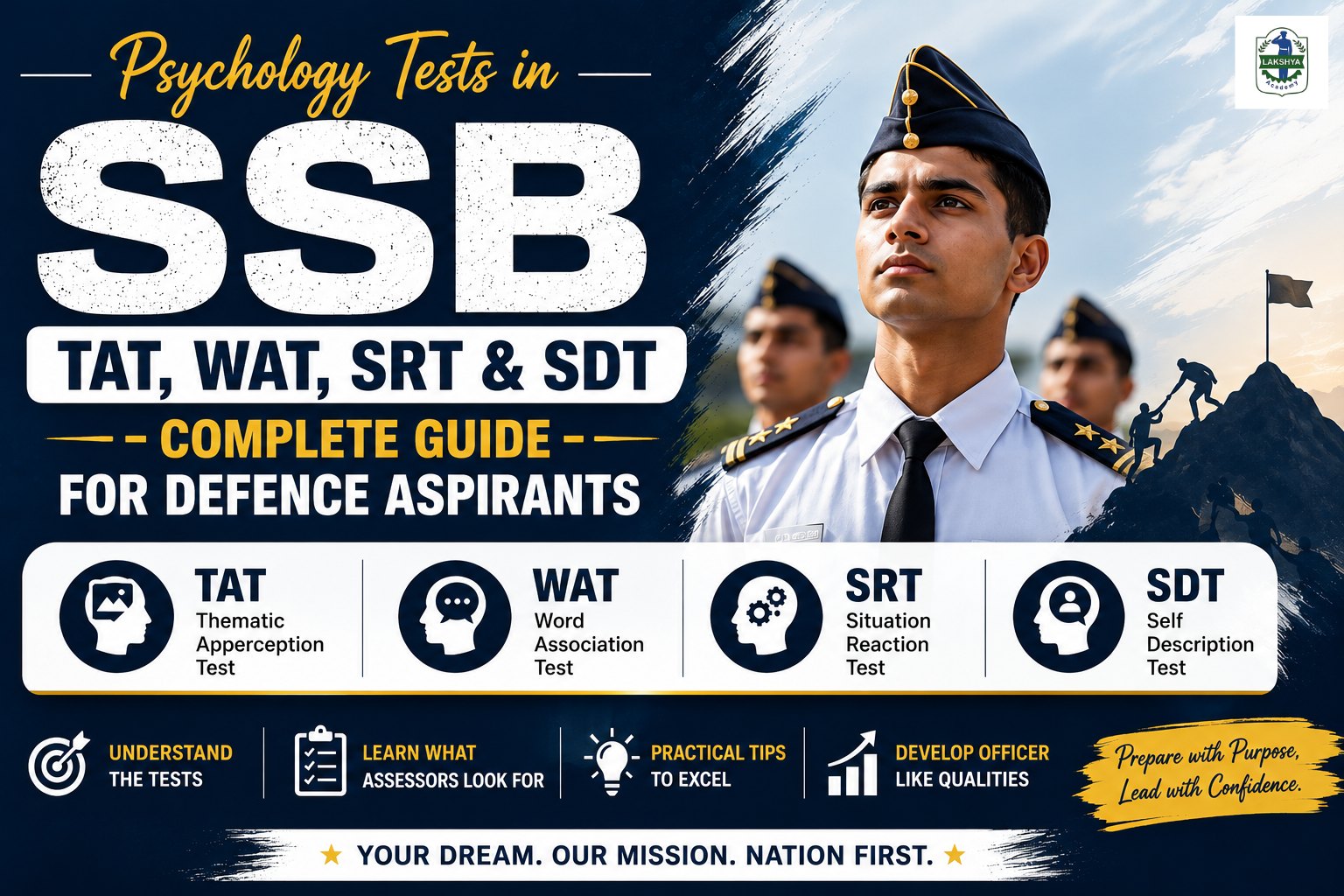
The four psychology tests conducted during SSB are:
- Thematic Apperception Test (TAT)
- Word Association Test (WAT)
- Situation Reaction Test (SRT)
- Self-Description Test (SDT)
Together, these tests provide assessors with a comprehensive understanding of a candidate’s personality.
1. Thematic Apperception Test (TAT)
What is TAT?
In the Thematic Apperception Test, candidates are shown a series of pictures, one at a time. For each picture, they must write a story based on what they observe.
The story should include:
- What led to the situation
- What is happening currently
- What the characters are thinking and feeling
- The likely outcome
What Assessors Look For
The assessor evaluates:
- Leadership qualities
- Initiative
- Problem-solving ability
- Social adaptability
- Positive outlook
Tips for TAT
- Focus on constructive and realistic solutions.
- Create a positive hero who takes responsibility.
- Avoid unrealistic or dramatic stories.
- Keep the story practical and action-oriented.
Common Mistake
Many candidates try to impress assessors by writing heroic or exaggerated stories. Assessors can easily identify such responses. Authenticity is always valued more than dramatization.
2. Word Association Test (WAT)
What is WAT?
In WAT, candidates are shown a series of words for a few seconds each. They must write the first meaningful thought or sentence that comes to mind.
For example:
- Word: Responsibility
- Possible Response: Responsible individuals earn trust through consistent actions.
What Assessors Look For
Through WAT, assessors analyze:
- Attitude
- Values
- Emotional maturity
- Confidence
- Social awareness
Tips for WAT
- Write short, positive, meaningful sentences.
- Focus on solutions rather than problems.
- Practice thinking constructively.
- Avoid memorized responses.
Common Mistake
Candidates often spend too much time creating perfect sentences. The goal is to capture natural thinking patterns, not literary excellence.
Situation Reaction Test (SRT)
What is SRT?
In SRT, candidates are given a series of real-life situations and must write how they would react.
Example:
- Situation: While travelling, you notice a person injured in a road accident.
- Response: Provides immediate assistance, informs emergency services, and ensures the victim receives medical help.
What Assessors Look For
The SRT evaluates:
- Decision-making ability
- Sense of responsibility
- Resourcefulness
- Courage
- Practical intelligence
Tips for SRT
- Be action-oriented.
- Give realistic responses.
- Demonstrate responsibility and initiative.
- Focus on solving the problem effectively.
Common Mistake
Some candidates write idealistic responses that may not be practical in real situations. Practical solutions are always preferred.
4. Self-Description Test (SDT)
What is SDT?
The Self-Description Test requires candidates to write honestly about themselves from different perspectives:
- Parents’ opinion
- Teachers’ opinion
- Friends’ opinion
- Self-opinion
- Future goals
What Assessors Look For
Assessors seek:
- Self-awareness
- Honesty
- Confidence
- Personal growth mindset
Tips for SDT
- Be truthful and balanced.
- Mention strengths and areas for improvement.
- Demonstrate willingness to learn and grow.
- Align your future goals with your aspirations.
Common Mistake
Candidates sometimes portray themselves as perfect individuals. Genuine self-awareness is far more impressive than exaggerated perfection.
- How to Prepare for SSB Psychology Tests
- Develop Officer-Like Qualities (OLQs)
Rather than memorizing answers, focus on developing qualities such as:
- Effective communication
- Responsibility
- Teamwork
- Initiative
- Confidence
- Positive attitude
- Read and Observe
- Stay informed about current affairs, social issues, leadership examples, and real-life problem-solving situations.
- Practice Regularly
- Daily practice of TAT, WAT, SRT, and SDT helps improve speed, clarity, and confidence.
- Seek Expert Guidance
- Professional feedback helps identify strengths and areas that require improvement.
Final Thoughts
The psychology tests in SSB are not designed to trick candidates. They are meant to identify future military leaders who possess the right mindset, character, and leadership potential.
Success in TAT, WAT, SRT, and SDT comes from genuine personality development rather than memorized answers. Focus on becoming a better version of yourself, and your responses will naturally reflect the Officer-Like Qualities sought by the Armed Forces.
At The Lakshya Academy, we provide structured SSB guidance, personalized mentoring, and practical psychology test training to help aspirants perform confidently and authentically throughout the selection process.