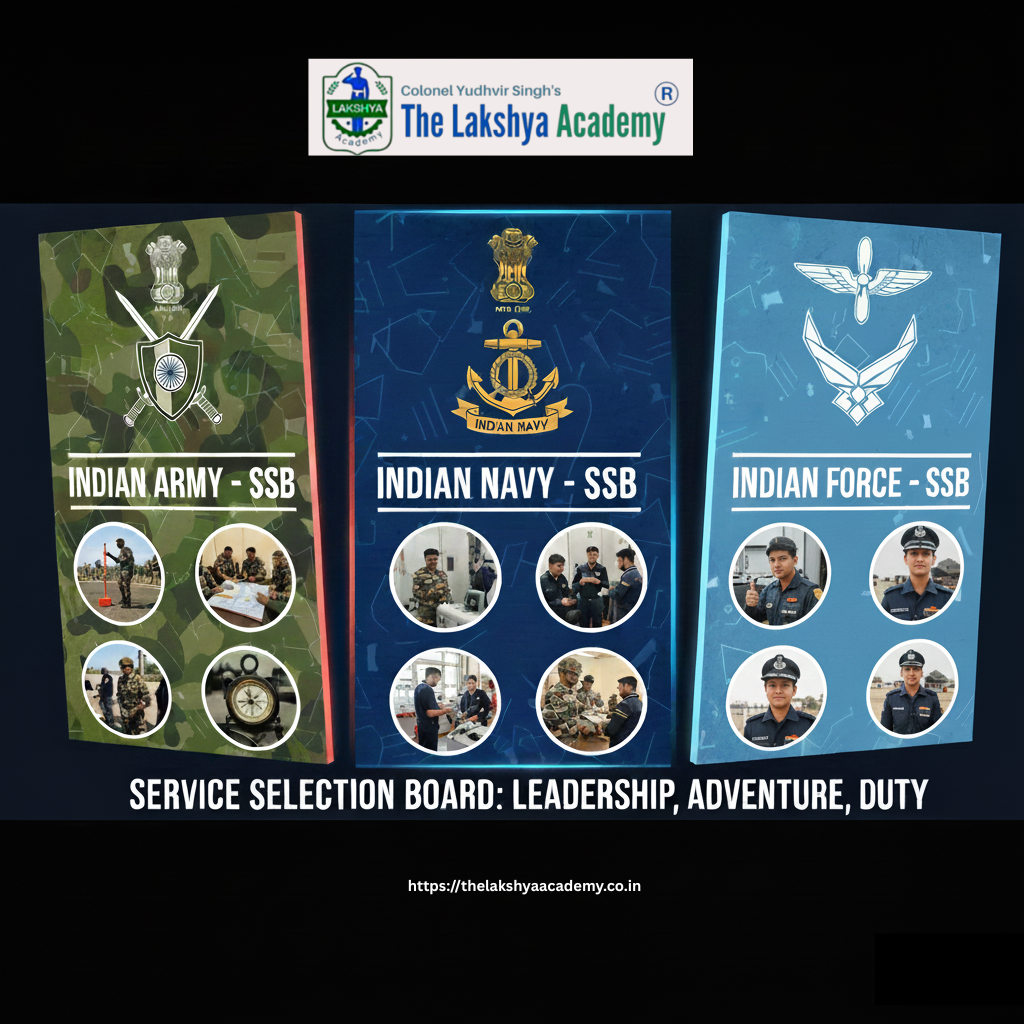
Are you aspiring to join the Indian Armed Forces as an officer? The Services Selection Board (SSB) is the gateway to a career in the Army, Navy, or Air Force. While the core SSB process is similar across all three forces, there are key differences in structure, tests, and focus areas tailored to each service’s unique requirements. At The Lakshya Academy, we specialize in SSB coaching to help candidates like you crack this challenging selection process. In this blog, we’ll break down the SSB differences for the Army, Navy, and Air Force, so you can prepare effectively.
What is SSB?

The SSB is a five-day evaluation process designed to assess a candidate’s officer-like qualities (OLQs) such as leadership, teamwork, decision-making, and mental resilience. It consists of two main phases: Stage I (Screening) and Stage II (Detailed Evaluation). Candidates undergo psychological tests, group tasks, interviews, and medical examinations. The process is rigorous, with a selection rate of about 1-2% for most entries.
While the foundation is the same, the SSB adapts to the specific demands of each force. Let’s dive into the differences.
SSB for the Indian Army

The Army SSB is the most common and has the highest number of candidates. It’s conducted at centers like Allahabad, Bhopal, Bangalore, and Kapurthala.
Key Stages and Differences:
Screening (Stage I): Includes Officer Intelligence Rating (OIR) tests, Picture Perception and Description Test (PPDT), and a group discussion. This weeds out unsuitable candidates.
Psychological Tests (Stage II): Thematic Apperception Test (TAT), Word Association Test (WAT), Situation Reaction Test (SRT), and Self-Description Test (SDT). These focus on personality assessment.
Group Testing Officer (GTO) Tasks: Outdoor activities like Group Discussion, Group Planning Exercise (GPE), Progressive Group Task (PGT), and Individual Obstacles. Emphasis on physical fitness and leadership in combat scenarios.
Personal Interview: Conducted by a panel, assessing motivation, knowledge of current affairs, and OLQs.
Medical Examination: Standard checks for Army fitness.
Unique Aspects: The Army SSB places a strong emphasis on physical endurance and adaptability to diverse terrains, reflecting infantry and armored roles. No specialized aptitude tests like those for flying branches.
SSB for the Indian Navy
Navy SSB is held at centers like Bhopal, Bangalore, and Coimbatore, with a focus on maritime operations.
Key Stages and Differences:
Screening (Stage I): Similar to Army—OIR, PPDT, and group discussion.
Psychological Tests (Stage II): Identical to Army—TAT, WAT, SRT, SDT.
GTO Tasks: Includes indoor and outdoor tasks like Group Discussion, GPE, PGT, and Command Task. However, there’s an added focus on nautical themes, such as boat-related scenarios in discussions.
Personal Interview: Probes knowledge of naval history, maritime affairs, and sea-based operations.
Medical Examination: Includes specialized tests for sea duty, like checks for motion sickness and underwater endurance.
Unique Aspects: The Navy SSB incorporates elements like the Pilot Aptitude Battery (PAB) for aviation branches (e.g., Naval Air Arm). There’s also a Computerized Pilot Selection System (CPSS) for pilot candidates, testing spatial ability and reaction time. Overall, it emphasizes teamwork in confined spaces, like submarines or ships.
SSB for the Indian Air Force

Air Force SSB is conducted at centers like Dehradun, Mysore, and Gandhinagar, with a tech-savvy, aviation-oriented approach.
Key Stages and Differences:
Screening (Stage I): OIR, PPDT, and group discussion, same as others.
Psychological Tests (Stage II): TAT, WAT, SRT, SDT, but with aviation-themed scenarios.
GTO Tasks: Similar to Army and Navy, but includes tasks simulating air operations, like aerial navigation discussions.
Personal Interview: Focuses on aviation knowledge, technology, and quick decision-making in high-stakes environments.
Medical Examination: Rigorous checks for flying duties, including eye tests, hearing, and G-force tolerance.
Unique Aspects: The Air Force SSB mandates the Pilot Aptitude Battery (PAB) for all candidates, assessing traits like hand-eye coordination, spatial orientation, and instrument interpretation. For flying branches, there’s the Computerized Pilot Selection System (CPSS) and Central Medical Examination Board (CMEB) evaluations. The process is faster-paced, reflecting the dynamic nature of air warfare.
Key Differences Across Forces
Aptitude Tests: Army has none; Navy and Air Force include PAB/CPSS for aviation roles.
Focus Areas: Army: Ground combat and physical stamina. Navy: Maritime and confined-space teamwork. Air Force: Aviation, technology, and rapid response.
Duration and Centers: All are 5 days, but Air Force SSBs can feel more intense due to additional tests.
Selection Criteria: OLQs are universal, but interviews tailor to service-specific knowledge (e.g., Army on land warfare, Navy on seas, Air Force on skies).
Why Choose The Lakshya Academy for SSB Preparation?
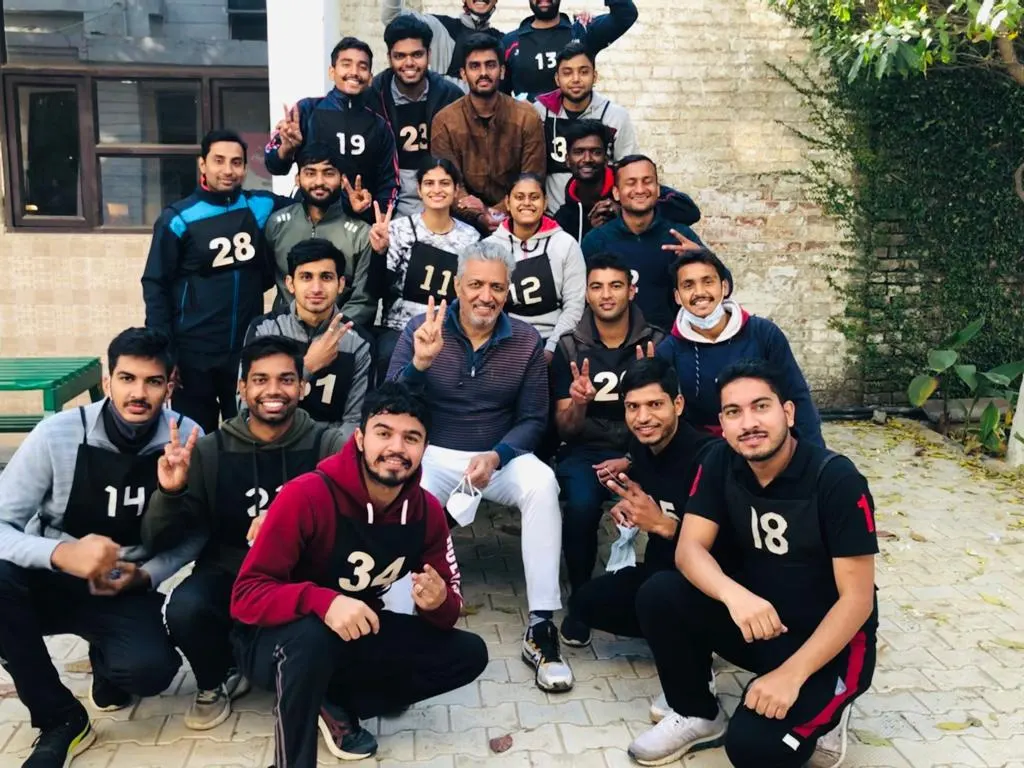
At The Lakshya Academy, we offer tailored coaching for Army, Navy, and Air Force SSBs, including mock tests, GTO simulations, and interview prep. Our experienced faculty understands these nuances, ensuring you’re ready for any force. Join our programs to boost your chances of success.
If you’re preparing for SSB, comment below or contact us for personalized guidance. Stay tuned for more defence exam tips.
Contact Details :
The Lakshya Academy
Address: B-277, Ground Floor, Near Ramphal Chowk, Sector 7, New Delhi
Website: https://lakshyaacademy.co.in
Contact Numbers:
+91 7827363838
+91 9313223768